At roughly 10:54 a.m. Eastern on September 3, 2026, the largest synchronized AI outage in industry history was underway: DownDetector lit up with more than 35,000 user reports against ChatGPT in the United States alone. In the same window, Claude and Grok each logged roughly 1,200 to 1,500 problem reports. The complaint curves rose within the same 90-minute window — Grok’s spike hit by 9:45 a.m. ET, Anthropic’s status reports posted at 9:23–9:26 a.m. ET, and ChatGPT’s reports began around 10:30 a.m. ET — not the slow escalation you see when a single platform has a bad deploy, but overlapping spikes across three fiercely competing products.
By the time status pages returned to green that afternoon, TechTimes had already called it the first time three competing frontier AI platforms went dark simultaneously at this scale — a large-scale, empirical demonstration of something risk analysts had been warning about for two years (and while a smaller synchronized outage of ChatGPT, Claude, and Perplexity occurred in June 2024, nothing of this magnitude had): ChatGPT, Claude, and Grok share a failure domain, and “multi-vendor” AI strategies built on them share it too.

What Happened on Sep 3: Anatomy of the Synchronized AI Outage
The morning played out in overlapping waves, and the timeline is worth reconstructing carefully because the two incidents that day were related but distinct.
Grok went dark around the same time as Claude — and stayed dark longest. Per xAI’s own status page, the outage began around 6:30 a.m. Pacific time and lasted roughly three and a half hours, hitting the chatbot on X, the mobile apps, and the underlying models. DownDetector reports for Grok surged from a handful to over 1,300 within an hour.
Claude degraded in the same window. Per Engadget, Anthropic’s status page showed Claude’s problems also beginning around 6:30 a.m. PT; Anthropic’s first public status report came at 9:23 a.m. Eastern — a partial outage tied to elevated errors on several Claude variants — and the company updated its status page repeatedly as different models recovered at different speeds.
ChatGPT failed last of the three. Users began reporting problems around 7:30 a.m. PT (Engadget, citing DownDetector), and OpenAI’s status page logged an investigation into “elevated errors across ChatGPT and Codex” as of 10:43 a.m. ET. Around 10:54 a.m. ET, DownDetector recorded the 35,000-plus US reports mentioned above.
One hypothesis ties the events together — tentatively. Per TechTimes’ analysis of the event, infrastructure monitoring service StatusGator recorded a single user-submitted report on September 3 stating that Azure’s East US region experienced ingress failures — timestamped 10:26 a.m. PT (1:26 p.m. ET), which is after the outage onset (9:23–10:43 a.m. ET) and even after services had begun recovering around 8:49 a.m. PT, per 9to5Google. Microsoft, for its part, denied that Azure was the underlying problem: “Microsoft says that this is not the case” (9to5Google), and WebProNews reported that no major cloud providers — AWS, Azure, or Cloudflare — logged widespread problems that morning. TechTimes’ claim that Azure East US is the primary compute region for a large share of enterprise AI workloads, and the region where ChatGPT, Claude, and Grok all route significant traffic, remains what makes the correlation worth examining — but it is a correlational hypothesis from third-party monitoring, not an established cause.
Importantly, no company publicly confirmed the precise root cause as of midday. Anthropic, OpenAI, and SpaceXAI all stated their engineering teams were investigating. What we have is a single user-submitted monitoring report of uncertain timing, a denial from the cloud vendor involved, and counter-evidence from other event reporting — a correlational signal at best, not a published RCA. Treat everything below about the Azure connection with that caveat in mind.
The Memphis incident, the same morning
Separately — or perhaps not so separately — on the same morning as the synchronized AI outage, SpaceXAI (the merged entity formed when xAI combined with SpaceX) suffered an outage at its Memphis compute center. The company posted a short note on X:
“We are sorry for the issues you may have experienced with Grok following an outage at our Memphis compute center this morning. We’d also like to apologize to our impacted compute partners. All systems have now been restored and are functioning nominally.”
That phrase — compute partners — mattered. Anthropic rents substantial capacity from the Memphis facility, reportedly more than 200,000 GPUs — part of a deepening compute entanglement between the two companies (Anthropic’s first profitable quarter and the xAI compute deal covers it in detail). When one site in Memphis hiccuped, Grok went down — and analyst posts on X observed that certain Claude Code features went dark alongside it, leading to reports that the Memphis incident may have taken parts of Claude’s serving capacity with it. Anthropic hasn’t said whether its Sep 3 incident was related to SpaceXAI’s data center. Elon Musk said the team was “taking corrective action to ensure this does not happen again.” Details on the root cause — power, cooling, networking, a bad software update — remained sparse in public statements.
The displaced-user cascade made everything worse
There’s a second mechanism that likely compounded the morning, and it’s one AI platforms can’t fully engineer away. When ChatGPT went down — after Grok and Claude were already failing, having started around 6:30 a.m. PT versus ChatGPT’s ~7:30 a.m. PT — waves of displaced users piled into Claude and Grok as alternatives, creating demand spikes that stressed those platforms at exactly the moment their shared infrastructure was already compromised.
This pattern isn’t new. TechCrunch reported after a June 2024 incident that secondary outages at Claude and Perplexity were possibly caused by overflow traffic from ChatGPT’s failure rather than independent bugs. On September 3, the cascade effect and the infrastructure failure may have operated simultaneously — and from the outside, they’re difficult to disentangle.
Per the companies’ own status pages, all three platforms were simultaneously impaired for roughly two and a half hours — from ChatGPT’s onset around 7:30 a.m. PT until Claude’s partial outage was marked resolved at 9:16 a.m. PT, with Grok staying down until about 10:00 a.m. PT — unless the user happened to be on Gemini. (TechTimes has characterized the total blackout as closer to 30 minutes; the status-page timelines don’t support that figure.)
Why “Vendor Diversity” Is an Illusion
Here’s the uncomfortable core of the synchronized AI outage story: most enterprise “multi-model” strategies would have failed that morning.
The standard playbook for AI reliability is multi-LLM routing — if OpenAI returns errors, fail over to Anthropic; if Anthropic fails, fail over to xAI. It looks like diversification on an architecture diagram. But on September 3, the three fallback targets failed together, because they sit on overlapping infrastructure. Per TechTimes, Gemini’s survival was the telling data point: Gemini runs on Google Cloud, with routing and compute layers entirely separate from Microsoft Azure. Per 9to5Google, the three platforms that failed all rely heavily on Azure, though other providers, including Google, are in the mix. One architectural fact separated the survivors from the casualties.
As the i10x analysis of the incident put it: logical vendor diversity is meaningless without physical infrastructure diversity. If all your fallback models are tethered to the same failing cloud region or edge layer, your failover strategy is an illusion — a diagram that promises redundancy the physical layer cannot deliver.
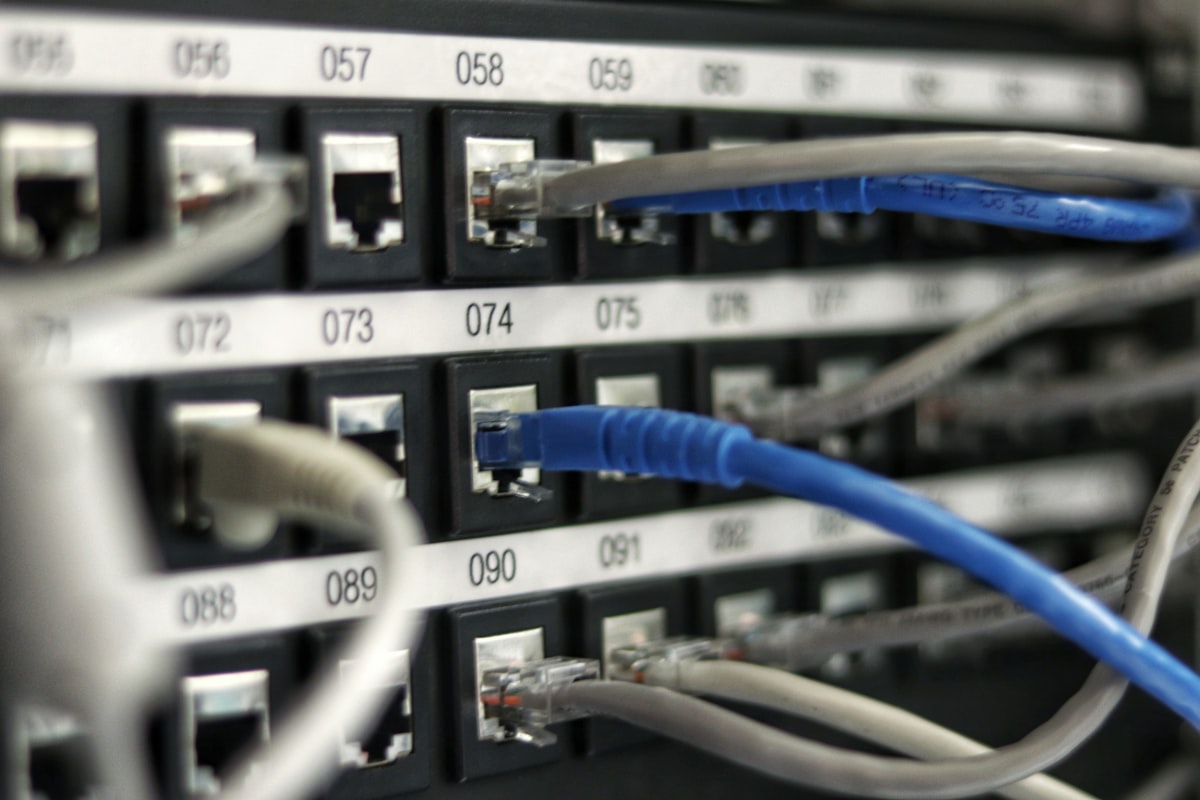
This isn’t hypothetical. The Cloud Security Alliance’s June 2026 analysis of AI provider concentration risk warned that the frontier model market is embedded within the hyperscaler cloud market, meaning enterprises face correlated concentration risk at both the model layer and the cloud infrastructure layer underneath it. September 3’s synchronized AI outage was that warning, rendered in downtime.
There’s even a precedent for the mechanism. A July 2026 Azure maintenance bug that wiped IP routes across a shared networking layer spread elevated latency and connectivity failures across Azure App Service, API Management, Kubernetes Service, and AI Search simultaneously. Shared control planes fail together: when a routing or load-balancing layer that multiple services depend on develops a fault, everything downstream degrades at once, no matter how different the applications are.
Inside the Failure Domain: What Azure East US Concentrates
Why didn’t regional redundancy save the big three? Because a cloud region isn’t just a building — it’s a bundle of shared services that AI serving stacks lean on heavily:
- Ingress and load balancing. Model traffic enters through regional front doors. If ingress fails, it doesn’t matter how many GPU nodes are healthy behind it.
- Identity and control planes. As one resilience researcher cited in prior TechTimes reporting described, an authentication failure in one Azure region can take down services that don’t look related at all, because they rely on the same identity graph. Tight coupling turns localized faults into propagating ones.
- Shared CDN and edge layers. Some reports during the incident pointed to Cloudflare experiencing elevated failure rates in the same window, raising the possibility that CDN-layer disruption compounded the Azure problem — though WebProNews reports that no major cloud providers, Cloudflare included, logged widespread problems that morning.
The result is that “East US” functions as a single point of failure for a surprising share of the world’s production AI inference — the kind of concentration that can turn a regional fault into a synchronized AI outage. Not because the region is badly run, but because so much of the AI economy chose to concentrate there — drawn by capacity availability, latency to US East Coast population centers, and the simple fact that your cloud provider’s biggest region has the most GPUs.
Colossus 2 and the Physical Concentration Problem
Days after the synchronized AI outage, the mirror image of the same risk got a victory lap. SpaceXAI’s Colossus 2 facility in Memphis — operational as of September 3 — was declared the world’s largest AI data center, at approximately 946 MW of IT power capacity, housing an estimated 1,112,000 H100-equivalent compute units — hardware whose economics are increasingly dominated by memory costs, as covered in our analysis of HBM reshaping the semiconductor landscape. Per Cryptobriefing’s coverage, the broader Colossus cluster had already reached or exceeded 1 GW of total AI compute capacity by mid-2026, and capacity at the cluster has roughly doubled every seven months since Colossus 1 went live in 2024.
The build-out details are as revealing as the headline number. Rather than waiting years for grid connections, SpaceXAI deployed temporary natural gas turbines alongside limited grid power to get online fast — with plans to remove roughly 69 temporary units once a permanent 1.2 GW gas power plant comes online by mid-2027. Projections for early 2027 put the facility at 1,531 MW.
Why does this belong in an outage post? Because the same Memphis complex that just demonstrated single-site failure propagation during a synchronized outage of three AI platforms is on a trajectory to become the single largest concentration of AI compute on Earth — and it already hosts capacity that other AI companies depend on — the same compute-leasing dynamic behind xAI’s landmark GPU deals with outside partners. The Sep 3 incident showed what happens when one Memphis power bus or networking layer stumbles: Grok goes dark and Claude’s serving capacity feels it. Now imagine that failure mode at 1.5 GW. Concentration isn’t just a cloud-region phenomenon; it’s a physical-site phenomenon, and the industry is actively building bigger ones.

The one mildly reassuring data point: per Epoch AI tracking (cited in Cryptobriefing’s coverage), the largest AI data centers have doubled in capacity every 10 months since mid-2024 — growth that may slow after early 2027 as easy wins give way to harder infrastructure problems. Slower growth means more time to engineer isolation. Whether it gets used is another question.
Lessons for Enterprise AI Architecture
If your production AI workflows went dark during the synchronized AI outage on September 3, the lesson isn’t “buy from a different vendor.” It’s “design for the failure domain, not the vendor list.” Here’s what that looks like in practice. And with enterprise AI costs exploding across 2026, every layer of this resilience engineering has to justify itself in budget terms, not just reliability terms.
1. Map failure domains, not vendors
Before writing any failover code, answer the physical question: where do my primary and fallback providers actually run? Two providers in the same region — or two providers leasing capacity from the same compute site, as the Memphis incident demonstrated — are one failure domain wearing two logos. A fallback that shares your primary’s region or physical site is decoration, not redundancy.
The genuinely differentiated pairing demonstrated by the synchronized AI outage: Azure-hosted models as primary, Gemini on Google Cloud as failover. Different company, different cloud, different physical footprint.
2. Build failover routing that reacts to real signals
Provider status pages are lagging indicators. Your routing layer should watch error rates and latency directly and trip automatically. A minimal pattern:
1 | async def route_request(request): |
Treat HTTP 529 (capacity overload) and 5xx bursts as trip signals, implement circuit breakers so you’re not hammering a dying primary, and — critically — test the fallback path regularly. A failover route discovered under pressure during an outage is not a failover route; it’s a wish.
3. Diversify at the serving layer, not just the model layer
For Claude specifically, note that Anthropic’s models are accessible through AWS Bedrock on Amazon’s infrastructure, which operates on separate capacity pools from Anthropic’s direct API. During Anthropic-specific outages, Bedrock has sometimes remained available when the direct API did not. Same model, different failure domain — that’s the kind of diversification that actually helps.
4. Degrade gracefully, with local backstops
The i10x analysis recommends aggressive circuit-breaker patterns and keeping a quantized, open-weights model running locally to handle critical tasks when cloud APIs go dark. You don’t need the local model to match frontier quality — you need it to keep checkout flows, on-call assistants, or customer-facing summaries limping along for the two to three and a half hours that the frontier layer is degraded. Caching prior completions for high-traffic prompts is a cheap second line of defense.
5. Read the SLA fine print with fresh eyes
A three-hour outage interrupting API-dependent products has contractual implications. Thoughtworks, in a post-incident analysis after a previous Claude outage, stated the core risk plainly: treating a single provider’s API as always-on is a single point of failure and a real threat to business continuity in 2026. If one company’s data-center hiccup can sideline a competitor’s product, expect redundancy and transparency clauses in AI infrastructure contracts to tighten — and make sure your own vendor agreements reflect that your fallback providers must not share your primary’s failure domain.
What Comes Next: Will AI Labs Actually Diversify?
Don’t count on it happening quickly, because the economic incentives all point the other way. Concentration exists for good reasons: the biggest regions and sites have the most capacity, the shortest lead times, and the best pricing. The Cloud Security Alliance’s May 2026 assessment noted that three hyperscalers control roughly 63 percent of cloud spending — and the foundational models enterprises depend on are concentrated within that already-concentrated layer. The IMF’s May 2026 analysis of AI systemic risk used blunt language: a single exploited vulnerability — or, as September 3 showed, a single infrastructure degradation — can cascade across numerous institutions simultaneously.
What would a genuinely resilient AI supply chain look like?
- Transparency into serving topology. Enterprises should be able to ask a model provider which region and which physical sites serve my traffic — and get an answer. Right now, most customers learned about the Memphis dependency from an apology tweet, not a capacity report.
- Contractually separated failure domains. Procurement teams treating AI like the critical infrastructure it has become will demand evidence that primary and fallback capacity don’t share regions or sites.
- Routine failover drills. The CSA’s guidance recommends treating AI infrastructure as single-failure risk with documented fallback routes, tested regularly — not discovered during an incident.
- Regulatory attention. When three of the world’s most-used AI products share one region’s ingress layer, concentration risk stops being a procurement question and becomes a systemic one. Expect policymakers to start asking the same questions bank regulators ask about cloud concentration in finance.
The open questions are real: Did trouble in Azure’s East US region actually contribute to the synchronized AI outage — as one user-submitted StatusGator report, timestamped after recovery had begun, hypothesized and Microsoft denies — and will any of the three companies publish an RCA? How much of Claude’s degradation came from Memphis versus Azure versus displaced-user overflow? Will Gemini’s survival that morning translate into a durable competitive advantage, or will Azure-hosted labs spread traffic across regions before the next event?
What’s no longer open is the structural lesson. On the morning of September 3, 2026, the frontier of artificial intelligence — the technology being embedded into medicine, finance, software development, and government — went silent for roughly two and a half hours amid trouble that third-party monitoring linked to one cloud region and one data center — a link no provider has confirmed, and one Microsoft denies. The models were fine. The weights were fine. The plumbing wasn’t. The synchronized AI outage settled one question for good, and anyone building on foundation-model APIs should spend less time comparing benchmark scores and more time answering a simpler one: when the next shared failure domain fails, where will my traffic go?
References and further reading
- Azure Status — service health dashboard for Azure regions, including East US
- OpenAI Status — ChatGPT, Codex, and API incident history
- Anthropic Status — Claude incident and uptime reporting
- xAI — official site
- DownDetector — real-time user-reported outage monitoring
- StatusGator — aggregated multi-provider infrastructure status monitoring
- Cloudflare — global CDN and edge network
- Google Cloud — Gemini’s independent routing and compute layer
- AWS Bedrock — Anthropic models on Amazon’s separate capacity pools
- Cloud Security Alliance — AI provider concentration risk analysis
- Thoughtworks — post-incident analysis of single-provider AI API risk
- IMF — analysis of AI systemic risk
- Epoch AI — tracking of AI data center capacity growth
Please let us know if you enjoyed this blog post. Share it with others to spread the knowledge! If you believe any images in this post infringe your copyright, please contact us promptly so we can remove them.