DeepSeek Reasonix: The Open-Source Terminal AI Coding Agent Challenging Claude Code
A new terminal coding agent called DeepSeek Reasonix launched this week and immediately shot to #1 on Hacker News. In a landscape already crowded with Claude Code, Cursor, and Aider, that kind of attention is hard to earn. So what makes DeepSeek Reasonix different? In short: it is the first terminal agent engineered natively around DeepSeek’s API, with a fanatical obsession over prefix-cache stability. The result is an MIT-licensed, open-source tool that can run all day for pocket change.

If you have been waiting for a credible open-source alternative to Claude Code that does not lock you into Anthropic’s pricing or ecosystem, DeepSeek Reasonix is the strongest contender to emerge this year. Here is what it does, how it keeps costs absurdly low, and whether it deserves a spot in your workflow.
What Is DeepSeek Reasonix?
DeepSeek Reasonix is an open-source terminal AI coding agent built and maintained by the community around the esengine/DeepSeek-Reasonix repository. It is written in TypeScript, distributed via npm as reasonix (with a shorter dsnix alias), and ships under the MIT license. The project explicitly refuses to be a generic multi-provider wrapper. Every layer of the stack is tuned for DeepSeek’s specific API behavior: dirt-cheap token pricing, automatic prefix caching, JSON mode, and the reasoning traces produced by models like R1 and V4.
The agent runs inside your terminal as an Ink-based TUI. You launch DeepSeek Reasonix inside a project directory, paste a DeepSeek API key on first run, and start typing natural language instructions. DeepSeek Reasonix can read files, run shell commands (with an approval gate), propose multi-file edits via SEARCH/REPLACE blocks, manage background jobs, and even orchestrate subagents for parallel exploration. A desktop client is available as a prerelease, but the terminal experience is the canonical surface.
The project’s north star is refreshingly honest: “a coding agent that stays cheap enough to leave on.” A tool that quietly burns $200 a month on background experiments is one nobody uses. DeepSeek Reasonix attacks that economics problem from every angle.
Why It Hit #1 on Hacker News
The Hacker News thread that pushed DeepSeek Reasonix to the front page generated hundreds of comments, and the debate was unusually technical. Developers were not just upvoting a shiny demo; they were debating cache invalidation strategies, token pricing mechanics, and harness architecture. That is a strong signal the tool solves a problem people actually feel.
Two pain points dominated the conversation. The first is cost. Terminal agents like Claude Code are powerful, but they can rack up significant API bills because most agent loops do not preserve the byte-stable prefixes that DeepSeek caches. Every turn that reorders history, injects a fresh timestamp, or re-serializes tool specs effectively throws away the cache and bills you at full rate. DeepSeek Reasonix promises to fix that by design, not by accident.
The second pain point is vendor lock-in. Claude Code is closed source. Cursor is closed source. Aider is open source but generic, leaving DeepSeek-specific advantages on the table. DeepSeek Reasonix offers an MIT-licensed alternative that is intentionally coupled to DeepSeek’s API, turning that coupling into an economic advantage rather than a liability.
If you are new to DeepSeek’s models, read our DeepSeek V4 Developer Guide first.
Core Features Deep-Dive
DeepSeek Reasonix is not a thin wrapper around an API. It ships with a full feature set that rivals established agents:
MCP Support. DeepSeek Reasonix speaks the Model Context Protocol via stdio, SSE, and Streamable HTTP transports. You can wire in custom tool servers the same way you would with Claude Code, and the configuration lives in a single JSON file. MCP is quickly becoming the standard interface for AI tooling interoperability.
Plan Mode. For complex refactors, you can kick off a plan, review the proposed steps, and apply them incrementally. This is the equivalent of Claude’s /plan or Cursor’s composer mode, but it runs in your terminal and respects the same cost controls as every other turn.
Cache-First Execution Loop. The heart of DeepSeek Reasonix is a three-region context partition: an immutable prefix (system prompt + tool specs), an append-only log of turns, and a volatile scratchpad for per-turn reasoning. This structure is what keeps the byte prefix stable across long sessions. We will dig into the math in the next section.
Multi-File Editing with Review. Edits are proposed as SEARCH/REPLACE blocks. Nothing hits disk until you run /apply or set auto-approval for trusted patterns. This review gate prevents the “oops, it deleted half my codebase” moments that plague fully autonomous agents.
Skills and Memory. You can author Markdown playbooks called skills that the model invokes on demand. Memory layers include project-local and global user memories, plus automatic semantic indexing via a local Ollama instance or any OpenAI-compatible embedding endpoint.
Cost Transparency. Every turn displays real-time cost and cache-hit badges in the TUI. Green means cheap, yellow means moderate, red means you might want to check what just happened.
Web Search Built-In. DeepSeek Reasonix includes web_search and web_fetch tools. By default it queries Bing, but you can switch to a self-hosted SearXNG instance or Metaso with a single slash command.
The Prefix-Cache Advantage: Real Cost Math
Here is where DeepSeek Reasonix stops being a neat open-source project and starts being a genuinely disruptive economic proposition.
DeepSeek bills cached input tokens at roughly 10 percent of the uncached rate. The catch? Prefix caching only activates when the exact byte prefix of your request matches the previous one. Most generic agent frameworks fail this test every turn. They inject fresh timestamps into the system prompt, shuffle tool specs, or compact history in place. The result: cache hit rates in practice often sit below 20 percent, even when the provider technically supports caching.
DeepSeek Reasonix takes the opposite approach. The architecture doc describes three pillars, and Pillar 1 is the Cache-First Loop. The context window is split into:
- Immutable Prefix — computed once per session, hashed, and pinned. System prompt and tool specs never move.
- Append-Only Log — new turns are strictly appended. No reordering, no editing in place.
- Volatile Scratch — chain-of-thought and transient plan state live here, then are distilled before being folded into the log. This prevents per-turn reasoning from poisoning the next cache key.
When context grows too long, older turns are compacted into a summary that is appended to the prefix, not inserted into it. The prefix bytes themselves survive the fold.
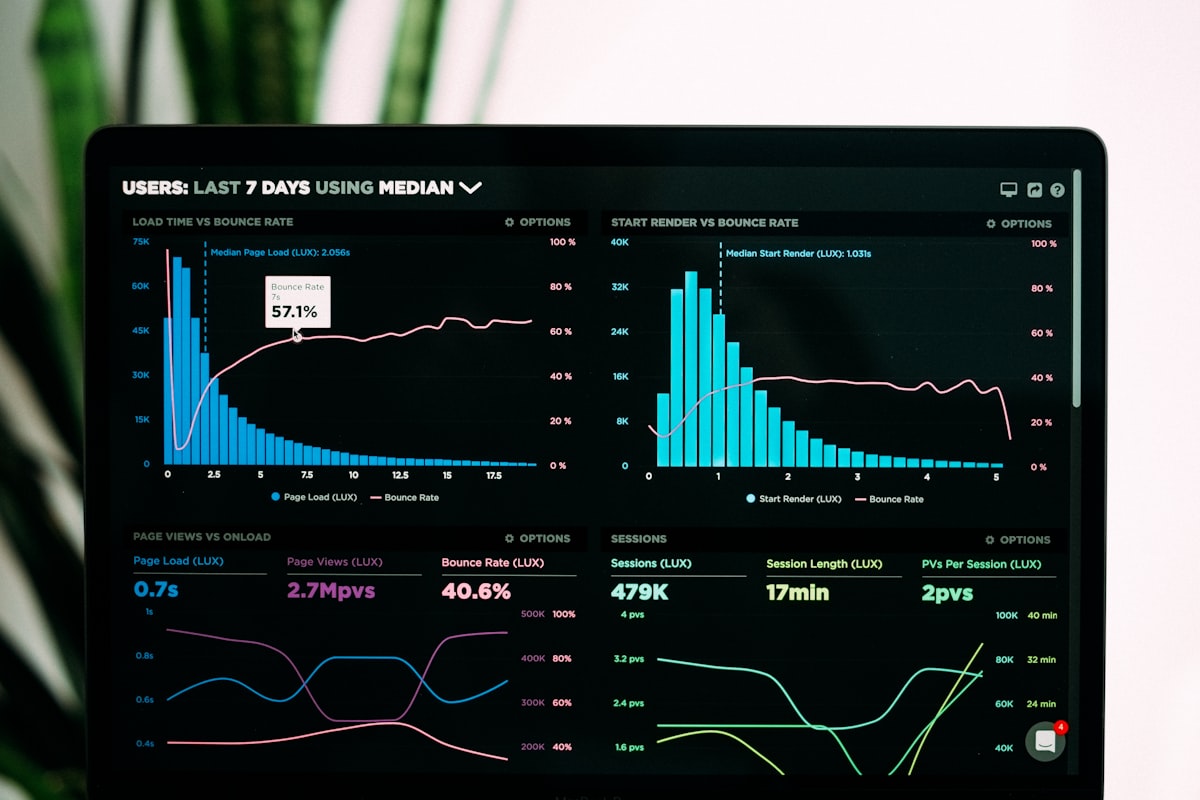
The result is dramatic. A real DeepSeek Reasonix user shared their DeepSeek dashboard for a single day of active coding (2026-05-01):
| Metric | Tokens |
|---|---|
| Input — cache hit | 435,033,856 |
| Input — cache miss | 767,616 |
| Output | 179,763 |
| Cache hit ratio | 99.82% |
At v4-flash pricing, that day cost $1.38. Without cache optimization, the same workload would have cost $61.06. The user saved roughly 97.7 percent of the uncached baseline. On v4-pro — the stronger model tier — the same workload costs about $2.07 with cache versus $189.73 without.
Those are not marketing estimates. The project publishes the methodology, the benchmark harness, and invites users to submit their own dashboard screenshots for inclusion. The synthetic benchmark suite (tau-bench-lite) compares DeepSeek Reasonix against a deliberately cache-hostile baseline using the same tools and system prompt, isolating the effect of prefix stability alone.
Prefix caching is a powerful technique for reducing API costs across any DeepSeek-based workflow.
For developers who run terminal agents daily, this is the difference between a $40 monthly habit and a $1,800 monthly shock. That cost advantage is the single biggest reason DeepSeek Reasonix has captured attention so quickly.
Installation and First Steps
Getting started with DeepSeek Reasonix is intentionally minimal. You need Node.js 22 or newer, and a DeepSeek API key from platform.deepseek.com.
Global install via npm:
1 | npm install -g reasonix |
Or try it once without installing:
1 | cd my-project |
On first launch, paste your API key. It persists to ~/.reasonix/config.json and survives relaunches. The shorter dsnix alias is available if you prefer fewer keystrokes.
DeepSeek Reasonix works on macOS, Linux, and Windows via PowerShell, Git Bash, or Windows Terminal. There is no Docker requirement, no Python virtualenv to manage, and no IDE plugin to configure. If your terminal works, DeepSeek Reasonix works.
A quick health check is available via reasonix doctor, which validates your Node version, API key, and MCP wiring. When you want to upgrade, reasonix update handles the bump.
Hands-On: A Real Refactoring Session
Imagine you are modernizing a legacy Express app to Fastify. You launch DeepSeek Reasonix inside the repo and type:
1 | Refactor the auth middleware and all routes in src/routes/ to Fastify |
DeepSeek Reasonix enters plan mode automatically for a task this broad. It reads the relevant files, proposes a plan with per-file steps, and waits for your /apply before touching disk. You can reject individual steps or edit the plan inline.
During execution, the TUI shows:
- A live cache-hit badge (green, because the tool specs and system prompt are stable).
- Per-turn cost, usually cents or fractions of a cent on
v4-flash. - A spinner for any background shell jobs, like running the test suite.
If the model calls read_file on twelve different route files, those calls are parallelized by default (read-only tools declare parallelSafe: true). The results land in the append-only log in declared order, preserving the prefix for the next turn.

When a tool call fails or the model emits malformed JSON, DeepSeek Reasonix does not crash. Pillar 2 — Tool-Call Repair — kicks in. It scavenges reasoning traces for hidden tool calls, flattens schemas with too many parameters into dot notation, repairs truncated JSON, and suppresses duplicate call storms. These are DeepSeek-specific failure modes that generic wrappers often miss.
If the refactor is genuinely hard, the model can emit <<<NEEDS_PRO>>> to self-escalate to the stronger v4-pro tier. You see a warning row, the turn retries on the better model, and you pay pro rates only for the turns that actually need it. No silent upcharges.
Who Should Use It? (And Who Shouldn’t)
DeepSeek Reasonix is not for everyone, and the project is admirably upfront about that.
Use it if:
- You want Claude Code-like power in the terminal without Claude Code pricing or closed-source constraints.
- You run long agent sessions and are tired of unpredictable API bills.
- You value MIT-licensed tooling and the ability to inspect or fork the harness.
- You are already using DeepSeek’s API and want a client that actually exploits its cost advantages.
Think twice if:
- You need multi-model flexibility. DeepSeek Reasonix is DeepSeek-only by design. Coupling to one backend is the feature, not a bug, but if you want to switch between Anthropic and OpenAI mid-session, look at Aider or OpenRouter. For a broader look at terminal agent options, see our coverage of the Pwn2Own Berlin 2026 security analysis, which examined how different AI coding assistants handle vulnerabilities.
- You want an IDE replacement. DeepSeek Reasonix is terminal-first. The diff lives in
git diff, not a side panel. - You are doing frontier-reasoning tasks like advanced mathematical proofs. DeepSeek V4 Pro is competitive with Claude Sonnet on coding, but Claude Opus still wins on the hardest reasoning benchmarks.
- You need an air-gapped or fully free solution. DeepSeek Reasonix requires a paid DeepSeek API key. For zero-cost local runs, Aider + Ollama or Continue.dev are better fits. For self-hosted open-source models, check our guide to running Gemma 4 locally.
Maturity is another honest concern. DeepSeek Reasonix is brand new. The desktop client is a prerelease without code signing. The community is growing fast — the Discord is bilingual and active — but you will encounter rough edges that Claude Code and Cursor have already smoothed over. For side projects and personal experimentation, that trade-off is often acceptable. For production systems with tight compliance requirements, you may want to wait a few releases.
The Bigger Picture: Why Open-Source AI Agents Are Winning in 2026
DeepSeek Reasonix did not emerge in a vacuum. It lands at a moment when three trends are converging.
First, developer tolerance for subscription lock-in is collapsing. Teams that standardized on Claude Code or Cursor are now asking hard questions about egress costs, data retention policies, and the inability to self-host. An MIT-licensed terminal agent with transparent pricing answers all of those concerns.
Second, MCP is becoming the USB-C of AI tooling. The Model Context Protocol means skills, memory systems, and custom tool servers can move between agents. DeepSeek Reasonix’s first-class MCP support means you are not betting on a single client; you are betting on an interoperable ecosystem.
Third, “vibe coding” is shifting from IDE magic to terminal discipline. The most productive developers in 2026 are not waiting for a GUI to catch up. They are running agents in tmux sessions, reviewing diffs in git, and piping results between tools. DeepSeek Reasonix fits that workflow natively. For more on the security risks of AI-assisted development, see our analysis of the vibe coding security crisis.
The cost innovation matters most. DeepSeek’s prefix cache is a public API feature, but most clients waste it. DeepSeek Reasonix proves that client-side architecture — immutable prefixes, append-only logs, and scratch isolation — can turn a 20 percent cache hit rate into a 99 percent cache hit rate. That is not a minor optimization; it is a 50x cost reduction that changes who can afford to use AI agents daily.
Bottom Line
DeepSeek Reasonix is the most credible open-source challenger to Claude Code that has shipped this year. It is opinionated, DeepSeek-only, and terminal-native — and those constraints are exactly what let it deliver 99.8 percent cache hit rates and sub-dollar daily costs for active users.
If you are already paying for a terminal agent, or if you have avoided them because the bills felt unpredictable, DeepSeek Reasonix deserves a two-hour experiment. Install it with npx reasonix code, point it at a side project, and watch the cost badge stay green while it refactors, tests, and commits.
The project is young, the desktop client is rough, and the model backend is not the absolute frontier for reasoning tasks. But for the 95 percent of software engineering that involves refactoring, testing, glue code, and debugging, DeepSeek Reasonix offers something rare: power without lock-in, and intelligence without sticker shock.
Give DeepSeek Reasonix a run. Your wallet will notice the difference.
References and further reading
- DeepSeek — Official website and API documentation
- DeepSeek API Keys — Developer platform
- Claude Code — Anthropic’s terminal coding agent
- Cursor — AI-native IDE
- Aider — Open-source multi-model terminal agent
- Ollama — Local LLM runner
- Continue.dev — Open-source AI coding assistant
- OpenRouter — Unified API for multiple LLM providers
- Node.js — JavaScript runtime
- npm — JavaScript package registry
- npm
reasonixpackage — DeepSeek Reasonix on npm - Model Context Protocol — Open standard for AI tool interoperability
Please let us know if you enjoyed this blog post. Share it with others to spread the knowledge! If you believe any images in this post infringe your copyright, please contact us promptly so we can remove them.